Li Lu, Fund Manager and Investor
He was the narrator of the story “Moving the Mountains”, which he did write a book called “Moving the Mountains: My Life in China”. We mainly followed his life during the course of the story, and his time outside of China. Where he left China after being listed in the Most-Wanted List, and studied in Columbia University. Before that, attended Nanjing University, who majored in Physics.
Since then, he has left China, studied in Columbia University. Who later received three degrees simultaneously, Economic, Business, and Law, which was a first in the university. Li was inspired into Banking, as his soon “Mentor” Warren Buffet, came in to speak to them in Columbia University. After his graduation, he started his own company called Himalaya Capital Management. He is even hinted to manage a large potion of Berkshire Hathaway’s, as soon as Warren Buffet retires.
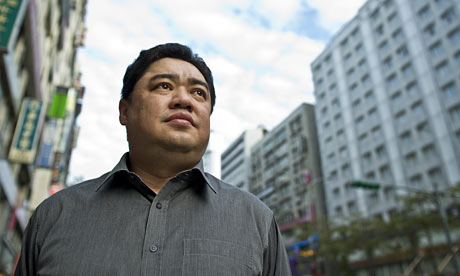
Wu’er Kaixi, Managing International Investment Fund in Taiwan
He was one of the important leaders that made a big impact during the Tiananmen Square Incident. He gave some of his personal experience during the incident, and appearing in the story more than a few times. Soon quickly emerged as a student leader.
Since his involvement, he was and still is 2nd Most Wanted in Mainland China, for his leadership during the Tiananmen Square Incident. He fled to France, and soon studied in Harvard University, which he failed to graduate from. After his failure to graduate, he soon flew to Taiwan, and started his own family. Where he started his own talk show host, for a few years during his time. After his countless of jobs, he soon fell to International Investment Fund, who gave him the job to run their fund. On June 3rd, 2009, he arrived to Macau to transit to China, who intended to surrender so he can clear his name so he may return back to China.
Chai Ling, President of Jenzabar, Software Company
She was also one of the student leaders during the “Incident”, she was known as the “General Commander” during the student protest. She was well known for organizing most of hunger strikes. She graduated from Peking University, during the time of Tiananmen Square Incident. After she was named in the most wanted list, she fled to Paris, and soon accepted a scholarship to Princeton University.
Now, she’s married, to Robert A. Maginn Jr., where they currently live in the Unites States. She is still active in speaking to people about the Incident, and was nominated twice for the Noble Peace Prize. She is currently the President of Software Company, Jenzabar. Whom did her husband, and sells software to Universities around the United States. In June 2010, she opened a non-profit organization called “All Girls Allowed” which is aimed to exposing and stopping the caused by China’s One-Child policy.