Monday, October 18, 2010

Tiananmen Square, (Protester Point of View)


It was in no doubt, a massacre to begin with. Many students and people of China didn’t like the government, and they wanted to Protest for what they believed in. They believed the government had no right, and they felt they needed more freedom. As thousands joined together in Tiananmen Square, they soon found that it was a terrible mistake from the start.
Thousands of people left their normal lives, to come to the heart of Beijing and protest to something they truly believed in. As they covered the square protesting against the government, the government pulled out the military because it was getting “out of hand”. The protester even started a Hunger strike, to show the government that they were going to starve to death, giving China a bad reputation worldwide. When that wasn’t enough, the military surrounded Beijing. That didn’t scare the people, until the first shot was heard. Many fell dead around the others, but some stood firm.
As a result of this tragic massacre, thousands died to what they believed would change China for good. Number of death was unknown, but knowing that plenty of innocent people, died for the demands of free media in China. But without this “Incident” China would not be the standing power it is today.

Monday, October 18, 2010

STUDENT LEADERS: LI LU, WU'ER KAIXI, CHAI LING

Li Lu, Fund Manager and Investor
He was the narrator of the story “Moving the Mountains”, which he did write a book called “Moving the Mountains: My Life in China”. We mainly followed his life during the course of the story, and his time outside of China. Where he left China after being listed in the Most-Wanted List, and studied in Columbia University. Before that, attended Nanjing University, who majored in Physics.
Since then, he has left China, studied in Columbia University. Who later received three degrees simultaneously, Economic, Business, and Law, which was a first in the university. Li was inspired into Banking, as his soon “Mentor” Warren Buffet, came in to speak to them in Columbia University. After his graduation, he started his own company called Himalaya Capital Management. He is even hinted to manage a large potion of Berkshire Hathaway’s, as soon as Warren Buffet retires.

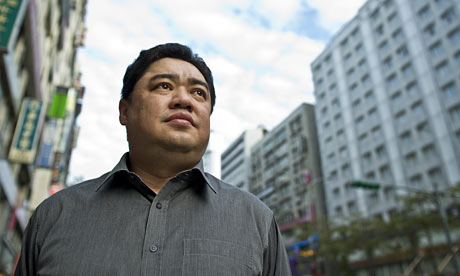
Wu’er Kaixi, Managing International Investment Fund in Taiwan
He was one of the important leaders that made a big impact during the Tiananmen Square Incident. He gave some of his personal experience during the incident, and appearing in the story more than a few times. Soon quickly emerged as a student leader.
Since his involvement, he was and still is 2nd Most Wanted in Mainland China, for his leadership during the Tiananmen Square Incident. He fled to France, and soon studied in Harvard University, which he failed to graduate from. After his failure to graduate, he soon flew to Taiwan, and started his own family. Where he started his own talk show host, for a few years during his time. After his countless of jobs, he soon fell to International Investment Fund, who gave him the job to run their fund. On June 3rd, 2009, he arrived to Macau to transit to China, who intended to surrender so he can clear his name so he may return back to China.

Chai Ling, President of Jenzabar, Software Company
She was also one of the student leaders during the “Incident”, she was known as the “General Commander” during the student protest. She was well known for organizing most of hunger strikes. She graduated from Peking University, during the time of Tiananmen Square Incident. After she was named in the most wanted list, she fled to Paris, and soon accepted a scholarship to Princeton University.
Now, she’s married, to Robert A. Maginn Jr., where they currently live in the Unites States. She is still active in speaking to people about the Incident, and was nominated twice for the Noble Peace Prize. She is currently the President of Software Company, Jenzabar. Whom did her husband, and sells software to Universities around the United States. In June 2010, she opened a non-profit organization called “All Girls Allowed” which is aimed to exposing and stopping the caused by China’s One-Child policy.

Friday, October 15, 2010

Student Leaders: Wang Chaohua, Wang Dan, Wei Jingsheng


Wang Chaohua
Wang Chaohua was one of the two women on the "21 Most Wanted Beijing Student Leaders" list posted by the Chinese government after the Tiananmen Square incident. After June 4, she spent 6 months in hiding and then she escaped to Los Angeles in March 1990. She received a PhD in modern Chinese Literature at UCLA. She is now a freelance writer. In the documentary "Moving the Mountain", filmed in 1994, she expressed her thoughts and regrets about the past, such as how those students at Tiananmen Square could have died as a result of the student leaders actions.


Wang Dan
Wang Dan was the most wanted in the "21 Most Wanted Beijing Student Leaders" list. He was politically active student at Peking University and after June 4 incident, he was imprisoned for 4 years. After parole in 1993, he began to write for publications overseas. He was then suspected that he was conspiring to overthrow the government and was imprisoned for 11 years. In 1998, he was flown to the US on medical parole. He then studied in Harvard University in 1998 and received a master's in East Asian history in 2001 and Ph.D. in 2008. Wang Dan is still active in promoting democracy in China, he travels the world garnering support from overseas Chinese communities.

Wei Jingsheng

Wei Jingsheng was a red guard when he was 16. When Deng Xiaoping came into power and repudiated the cultural revolution, Wei Jingsheng attacked the government, one of the very few who denounced Deng. In 1979, Wei Jingsheng was imprisoned for passing military secrets. He wrote a letter denouncing the inhumane conditions in the prison. He was detained until 1997 and was deported to the US for "medical reasons". He has won many awards for his work for democracy and has been praised as the "Father of Chinese Democracy" and "Nelson Mandela of China". He was nominated for the Nobel Peace Prize in 2009. In the film, "Moving the Mountain", he gives his comment about the incident as a more experienced activist.

Wednesday, October 13, 2010

Tiananmen Incident - How Views Can Differ

It is interesting how views about one single event can differ so much, how some people know about a major event while some are forbidden to hear of it. For example, the 1989 protests in Tiananmen Square is named an incident in China and a massacre to most of the rest of the world. At the time, the government’s view was divided, some members, such as Zhao Ziyang, wanted a soft and sympathetic approach to the demonstrations while some, like Premier Li Peng, wanted military action. Overall, the government felt that the demonstrations were threatening the stability of China. 


Now days, China’s views of the incident is mostly the same, the crackdown on June 4th is still viewed as necessary military action to ensure stability. It is a topic forbidden in the government. When, in 2009, Hilary Clinton said Beijing needed to “provide public accounting of those killed, detained or missing, both to learn and to heal”, a Chinese spokesman replied saying: “The US remarks are groundless accusations against the Chinese government and in contravention of the fundamental norms governing international relations, as well as a gross interference in China's internal affairs…” Because it is a forbidden topic, information about the incident is generally banned in media in China. Twitter, flickr and other social-media websites were banned for days before and during the 20th anniversary of the incident. Internet censorship, such as in Google, is used to keep the people from finding anything related to the protests. 

This is how history is portrayed differently around the world. With suppression like censorship, sometimes events are not known in the country that it happened in but is known to the rest of the world. Sometimes, the view of the government determines what they show their people, and therefore not giving them the freedom to have a view themselves.

Wednesday, October 13, 2010

1989 - Tiananmen Square Incident Timeline

Friday, October 01, 2010

Timeline: 1959 - 1976 Cultural Revolution and Death of Mao

Monday, September 27, 2010

Timeline: 1949 - 1958 : First Five-Year Plan and the Great Leap Foward

>